
Lifespan & Maintenance
How long will your revetment last and how do you keep it in top condition?
Lifespan
How long does shoring last?
The lifespan of sheet piling varies greatly per material type and depends on the circumstances. Hardwood and plastic each have their own strengths — the choice determines how long you can enjoy a stable bank without any worries.
On this page you can read the expected lifespan per material, which factors influence sustainability, how to apply maintenance and when it is time to intervene. This way you keep your revetment in top condition for years to come.
By material
Lifespan per material type
An overview of the expected lifespan for each material we supply.
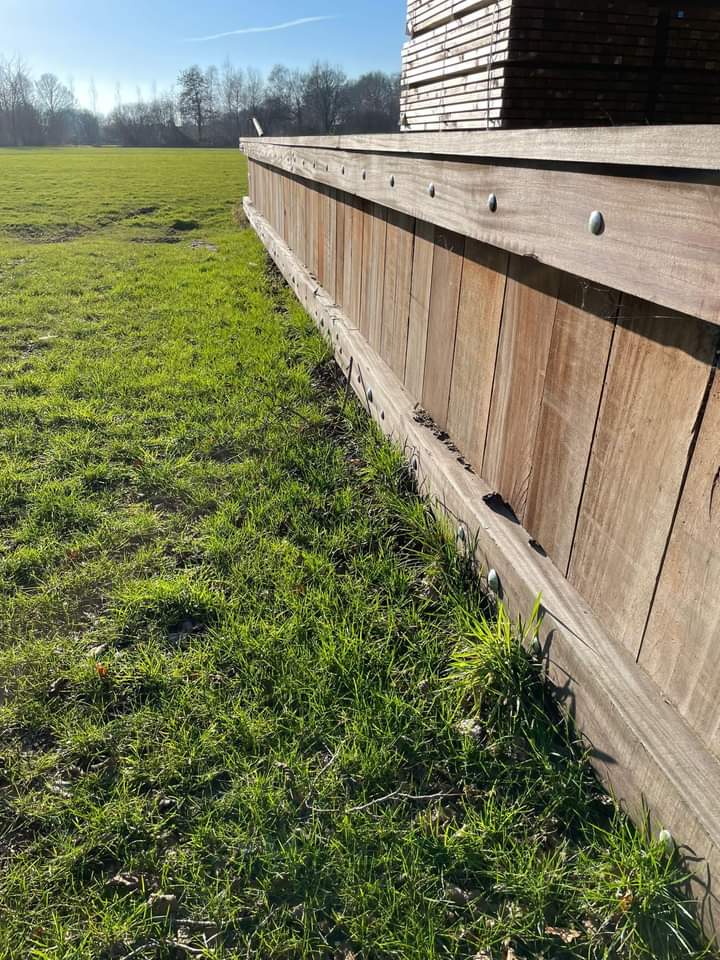
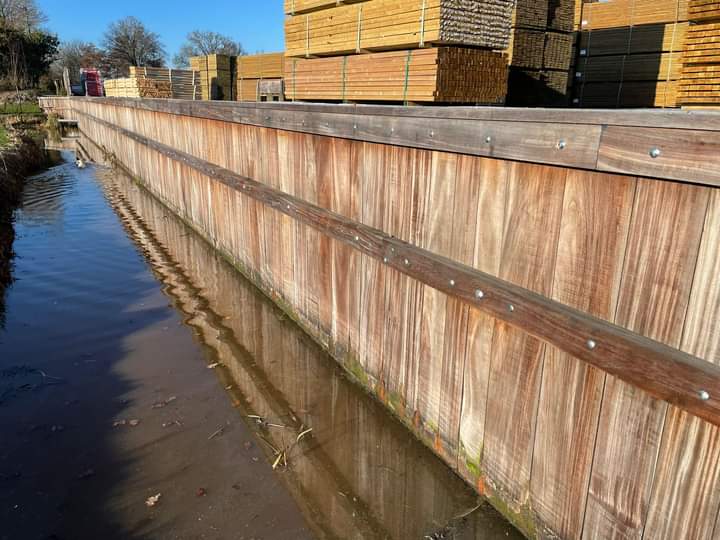
Azobe hardwood — 25 to 50 years
Azobé (also called Ekki) is the most commonly used hardwood for sheet piling in the Benelux. This tropical hardwood has durability class I, the highest classification. In fresh water with a stable water level, the lifespan can be closer to 50 years. In brackish or salt water, or with strongly fluctuating water levels, 25 to 35 years is more realistic.
Prolock plastic — 50 years and longer
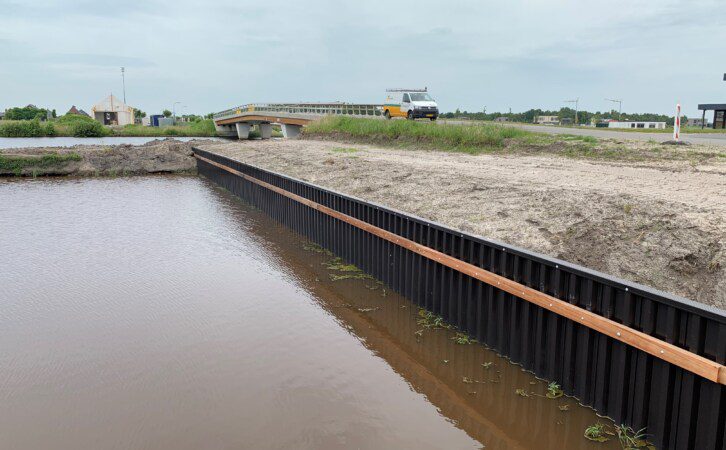
De Prolock sheet piling planks made from recycled HDPE plastic are designed for a lifespan of at least 50 years. The material is completely resistant to rot, mold, insects and corrosion. Prolock offers the longest life expectancy of all sheet piling materials.
Other types of wood
In addition to azobé, other types of wood are sometimes used for sheet piling. Pine or spruce (impregnated) usually lasts 10 to 20 years. Oak wood can last 15 to 30 years. We always recommend azobé or Prolock for long-term shoring projects because of their proven performance in permanent water contact.
Influencing factors
What determines the lifespan?
The actual lifespan of your revetment depends on several factors. By understanding these, you can make better choices regarding materials and installation.
Water type and water quality
Fresh water is the least aggressive for revetment material. Brackish water (mixture of fresh and salt) accelerates wear on wood, especially in the transition zone around the waterline. Salt water is the most damaging. Prolock plastic makes no distinction: the material performs identically in all water types.
Soil type and ground pressure
Clay soil retains moisture against the planks for longer, which can increase the weathering speed of wood. Sandy soil drains better but offers less support. The load due to earth pressure also influences mechanical wear: the higher the earth pressure, the more heavily the material is loaded.
UV radiation and weather
The part of the revetment that extends above the waterline is exposed to sun, rain and frost. In hardwood this causes the typical silver-gray weathering and can eventually cause surface cracks. Prolock plastic is UV stabilized and shows minimal discoloration over the years.
Quality of the installation
A professionally installed revetment lasts significantly longer. Incorrectly placed planks can become crooked due to uneven ground pressure, water forces or insufficient driving depth. We always recommend working with experienced professionals. You can read more about placement on our page install revetment.
Water level changes
Large fluctuations in water levels are one of the biggest enemies of wooden revetments. Repeated wetting and drying of the waterline zone accelerates weathering. With artificially managed water levels (polders, city waters) this effect is usually limited. This can be more pronounced in natural watercourses. Plastic sheeting does not suffer from this.
Maintenance
Maintenance requirements per material
Maintain hardwood
The good news: hardwood sheet piling from azobé requires very little maintenance. The weathering to silver gray is a completely natural process that does not affect structural integrity. You do not need to treat the wood unless you want to retain the original dark brown color. In that case, you can apply a UV-protective wood oil annually.
What you must do: check the sheet piling annually for loose planks, tilt or damage. Remove any vegetation that could damage the planks or obscure the view of the structure. Pay particular attention to the waterline zone, where wear occurs most quickly.
Maintain plastic
Prolock plastic sheeting is completely maintenance-free. You do not need to paint, oil or impregnate the material. The only maintenance we recommend is occasionally cleaning algae growth with water and a soft brush. This is purely cosmetic — algae does not affect the material.
A periodic visual inspection (once every 2 to 3 years) is sufficient to check the structure for possible subsidence or damage due to external influences.
When to intervene?
Signs that your shoring needs attention
Recognize these warning signs in time to prevent greater damage and higher costs.
Skew
Planks that slope noticeably forward or backward indicate subsidence or compression of the earth pressure.
Visible rot
Soft or spongy wood at the waterline indicates advanced weathering and requires quick action.
Loose planks
Planks that come loose from the posts due to corrosion of bolts or decay of the wood.
Land loss
If you notice soil draining behind the sheeting, there may be cracks or holes.
Also look for water infiltration on the landward side and uneven tops of planks. Do you notice one or more signals? Then take contact us for advice. Partial replacement is often sufficient.
Practical tips
This way you maximize the lifespan
With these measures you will get the most out of your revetment — regardless of the material chosen.
- Choose the right material for your situation — get advice from one specialist
- Have it installed professionally with the correct piling depth and post distances
- Use stainless steel mounting materials to prevent corrosion
- Avoid heavy loads directly against the top of the revetment (cars, machines)
- Keep plants at a distance — roots of trees and shrubs can damage the structure
- Check annually the sheeting visually, especially after winter
- Repair minor damage immediately to prevent bigger problems
- Ensure good drainage behind the revetment to prevent unnecessary ground pressure
Would you like to know which material and construction best suits your situation? Request a quote without obligation and we are happy to advise you on the optimal lifespan for your project.
Read more
Everything for your sheet piling project
Hardwood vs plastic
Extensive comparison between hardwood and plastic sheeting.
Compare now →Shoring costs
How much does sheet piling cost per linear meter? A clear overview.
View prices →Installing bank protection
Practical manual for installing sheet piling.
View manual →Request a quote
Free, customized quote - response within 24 hours.
Request a quote →Advice about lifespan and maintenance?
Our specialists will help you choose the right material and provide tips for a long lifespan. Request a quote without obligation or contact us.